The Homeowner’s Guide to 2026 Gutter Trends
Home exteriors are evolving quickly, and gutters are no longer just a functional add‑on. In 2026, gutter systems are becoming a major part of both home protection and curb appeal. With Minnesota’s heavy snow, ice buildup, spring rainstorms, and falling leaves, homeowners in Wright County and surrounding communities need gutter systems that are smarter, stronger, and lower maintenance than ever before.
This guide explains the biggest 2026 gutter trends and what they actually mean for homeowners in Central Minnesota.
Why Gutters Matter More in Minnesota Than Most States
Minnesota homes experience extreme seasonal swings: deep winter freezes, rapid spring thaws, summer downpours, and heavy autumn leaf fall. Each season stresses your drainage system differently.
A properly designed seamless gutter system helps prevent:
- Basement flooding
- Foundation settlement
- Fascia and soffit rot
- Ice dams
- Landscape erosion
- Siding staining
In short: your gutters directly protect your home’s structure — not just the roofline.
1. 6-Inch Seamless Gutters Are Replacing 5-Inch Systems
One of the clearest 2026 trends is the shift from standard 5-inch K‑style gutters to oversized 6-inch seamless gutters.
Why the change?
Minnesota storms are producing heavier rainfall totals and faster snowmelt cycles. Larger roofs, especially newer builds and homes with steep pitches, overwhelm smaller systems.
Benefits of 6-inch gutters
- 40%+ more water capacity
- Less overflow during storms
- Better performance during snowmelt
- Reduced ice dam formation
- Longer fascia life
For most homes built after 2000 in St. Michael, Albertville, Otsego, and Rogers, 6-inch aluminum gutters paired with 3×4 downspouts are now considered the best practice.
2. Bigger Downspouts (3×4) Are Becoming Standard
Gutters can only perform as well as their drainage exits. That’s why 2026 installations are increasingly using 3×4 downspouts instead of 2×3.
Larger downspouts:
- Drain faster during heavy rain
- Prevent gutter backup
- Reduce winter freeze blockages
- Protect basements from overflow
For Minnesota homes with longer roof runs or two‑story elevations, this upgrade dramatically improves system performance.
3. Advanced Gutter Guards (Micro‑Mesh Stainless Steel)
Traditional gutter covers often failed because they blocked large debris but allowed pine needles and shingle grit through. Newer 2026 systems use surgical‑grade stainless steel micro‑mesh technology.
What makes modern guards different?
They filter water at a much finer level while shedding debris off the roof edge before it enters the gutter.
Homeowners benefit from:
- Little to no seasonal cleaning
- Reduced ladder use
- Improved winter flow
- Fewer clogs during leaf season
In wooded Minnesota neighborhoods, gutter guards are shifting from a luxury upgrade to a practical necessity.
4. Smart Gutters & Ice‑Dam Prevention Technology
A major emerging trend is the integration of smart monitoring and heating systems.
New options include:
- Temperature‑activated heat cables
- Moisture sensors
- App‑connected alerts for blockages
- Automatic freeze prevention systems
Ice dams remain one of the leading causes of winter roof damage in Minnesota. Smart gutter technology works proactively — melting problem areas before water backs under shingles.
5. Popular 2026 Gutter Colors and Finishes
Gutters are now part of exterior design, not just hidden trim.
Trending gutter colors in 2026
- Matte black
- Dark bronze
- Musket brown
- Charcoal gray
- Forest green (cabins and wooded homes)
- Real copper (high‑end homes)
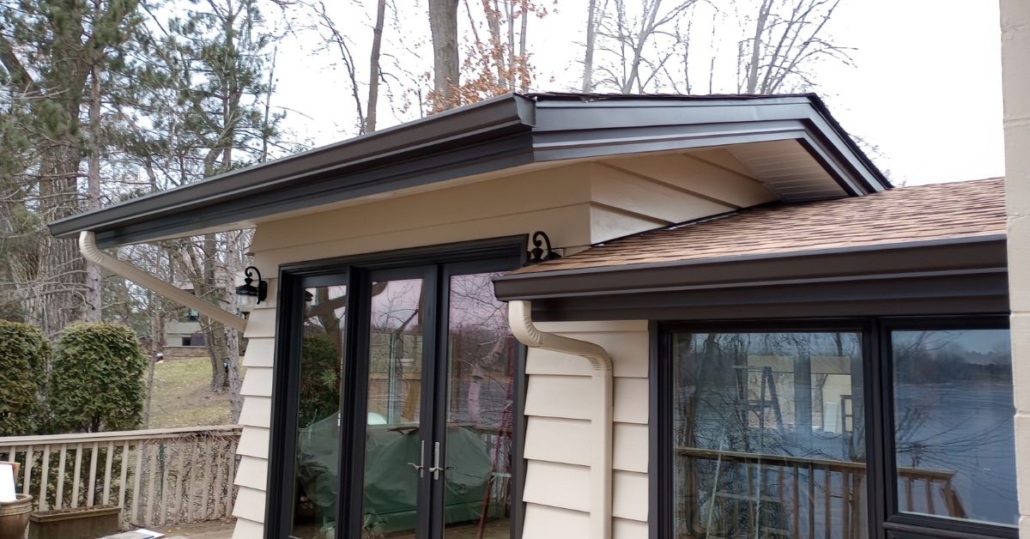
Black gutters paired with white siding and black windows are especially popular in modern farmhouse and new construction homes across Wright County.
6. Sustainability & Rainwater Management
Eco‑friendly home design is influencing gutter systems. Many homeowners now want gutters that control and reuse water instead of just dumping it near the foundation.
Common additions:
- Rain barrels
- Underground drain tile extensions
- Pop‑up emitters
- Garden irrigation connections
This protects foundations while also supporting landscaping during dry summers.
7. Hidden Hangers & Stronger Mounting Systems
Another 2026 improvement homeowners rarely see — but benefit from — is mounting hardware.
Modern seamless gutters use hidden hangers secured into rafters or trusses instead of spike-and-ferrule systems.
Advantages:
- Higher snow load resistance
- Straighter gutter lines
- Reduced sagging
- Longer lifespan
This is especially important in Minnesota where heavy snow and ice accumulation can exceed 40+ pounds per linear foot.
8. Seamless vs Sectional Gutters: Why Seamless Wins
Sectional gutters have joints every 10–20 feet. Every joint is a potential leak point.
Seamless gutters are custom‑formed on site to fit the exact dimensions of your home.
Benefits of seamless gutters
- Fewer leaks
- Cleaner appearance
- Less maintenance
- Longer service life
For homeowners planning to stay in their home long‑term, seamless aluminum gutters typically provide the best return on investment.
What These Trends Mean for St. Michael Homeowners
The biggest takeaway: modern gutters are no longer just drainage — they are a home protection system. Choosing the right size, material, and accessories directly affects roof lifespan, foundation stability, and maintenance costs.
Homes in St. Michael, Hanover, and surrounding Minnesota communities benefit most from:
- 6-inch seamless aluminum gutters
- 3×4 downspouts
- Stainless steel gutter guards
- Proper drainage extensions
- Professional installation
Maintenance Still Matters
Even the best gutter system needs occasional inspection.
We recommend homeowners:
- Inspect gutters each spring and fall
- Check for downspout discharge away from the home
- Ensure extensions remain clear
- Schedule professional inspection every 1–2 years
Preventative maintenance is far less expensive than foundation or roof repairs.
Why Professional Installation Is Important
Improper slope, poor fastening, or undersized systems are the most common causes of gutter failure — not the material itself.
Professional installers calculate:
- roof pitch
- drainage volume
- downspout placement
- snow load exposure
Correct design is what separates a 5‑year gutter system from a 25‑year system.
FAQ
How often should gutters be replaced in Minnesota?
Most aluminum seamless gutters last 20–30 years when properly installed and maintained. Guards can extend their lifespan.
Are gutter guards worth it in Minnesota?
Yes. Homes with trees benefit the most. Guards reduce cleaning, improve winter drainage, and help prevent ice dam buildup.
What size gutters do most homes need?
Many modern Minnesota homes perform best with 6‑inch gutters and 3×4 downspouts, especially two‑story homes or steep roofs.
Do new gutters help prevent ice dams?
They help significantly. Proper sizing, slope, drainage, and optional heat cables all reduce ice dam risk, though attic insulation and ventilation also matter.
How much maintenance do seamless gutters require?
With guards, typically just a yearly inspection. Without guards, cleaning 1–2 times per year is recommended.
Can gutters increase home value?
Yes. Buyers recognize protected foundations and low‑maintenance exteriors as a major advantage during home inspections.
About Rain Master Seamless Gutters
Rain Master Seamless Gutters is a locally operated company serving St. Michael, Minnesota and surrounding communities. We specialize in custom seamless gutter installation, gutter guards, and drainage solutions designed specifically for Minnesota weather conditions.
For estimates, inspections, or questions about your home’s drainage system, contact our team for a consultation.