Why Fixing Sagging Gutters in June Saves Your Roof from Ice Dams Next January
When June arrives in Minnesota, ice dams are usually the absolute last thing on a homeowner’s mind. We are too busy enjoying the warm Twin Cities summer, firing up the grill, and keeping up with lawn care.
However, your home’s exterior features a highly connected ecosystem. The structural issues currently brewing along your roofline right now will directly dictate how well your home survives the freezing winter temperatures six months from now.
If you noticed your gutters pulling away, holding standing water, or visibly sagging during recent spring downpours, fixing them in June is the single best preventative measure you can take to avoid catastrophic roof ice dams next January.
The June-to-January Connection: How Sags Turn Into Dams
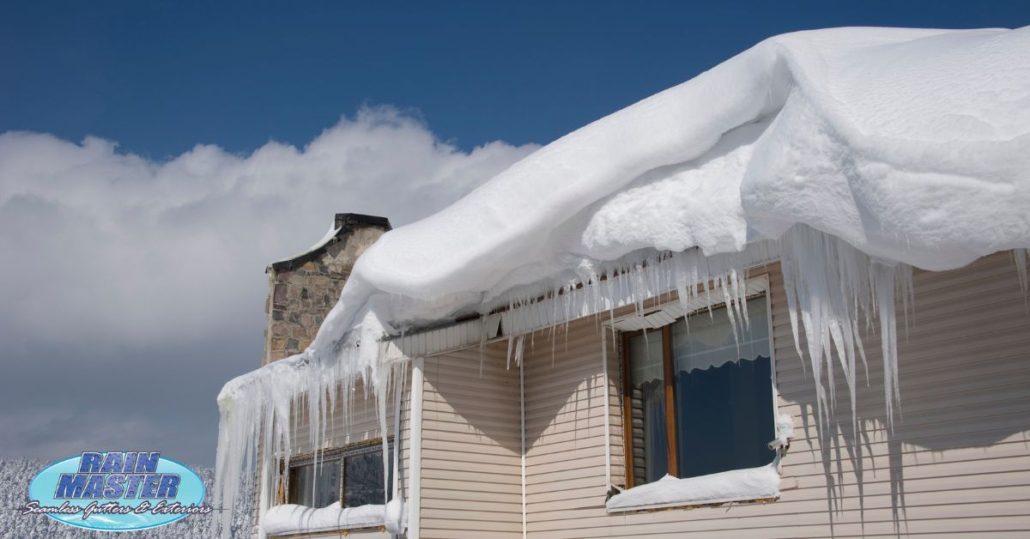
An ice dam forms when warm air leaks from your home into the attic, melting the snow on your upper roof. This melted snow runs down until it reaches the cold eaves (the edge of your roof overhanging the exterior walls), where it refreezes into a thick ridge of ice.
So, how do your gutters play into this?
While gutters do not cause ice dams on their own, sagging gutters act as a massive catalyst and structural hazard when frozen weather hits. Here is exactly how a summer problem transforms into a winter nightmare:
- The Frozen Pool Effect: A sagging gutter loses its pitch (the slight angle required to guide water toward downspouts). This causes water to pool inside the low spots. In late fall, that pooled water and wet debris freeze into a solid chunk of ice before the first major snowfall even hits.
- The Backup Trigger: When winter snow melts off your roof, it flows down to find a gutter channel already completely filled with solid ice. With nowhere to drain, the liquid water backs up quickly over the cold roof edge, rapidly accelerating the growth of a severe ice dam.
- The Structural Collapse Risk: Ice is incredibly heavy, weighing about 57 pounds per cubic foot. When a gutter is already sagging due to loose or broken hangers in June, filling it with hundreds of pounds of solid winter ice will pull it completely off the fascia board, destroying your home’s soffit and fascia.
The Benefits of Summer Gutter Repair vs. Winter Scrambling
Attempting to resolve water drainage issues or ice dams in the dead of winter is dangerous, highly expensive, and often temporary. Taking action during June offers clear structural advantages:
- Dry Wood Assessment: June weather allows professional installers to properly inspect your wooden fascia boards. If sagging gutters have caused water to overflow and rot the underlying wood, the summer heat thoroughly dries out the area so we can replace the structural wood before mounting new gutters.
- Optimal Sealant Curing: High-grade commercial gutter sealants require warm, dry temperatures to properly cure and form a permanent, watertight bond. Installing or repairing gutter joints in June guarantees the seal won’t fail when freezing rain hits.
- Proactive Reinforcement: Rather than using cheap spikes that easily pull out, summer updates allow us to install heavy-duty Raytec hidden hangers spaced tightly to handle both massive summer cloudbursts and crushing winter snow loads.
 Why Twin Cities Homeowners Rely on Rain Master
 Why Twin Cities Homeowners Rely on Rain Master
At Rain Master, we specialize in building gutter systems explicitly engineered to endure Minnesota’s extreme 100-degree summer-to-winter temperature swings. We manufacture custom, 32-gauge seamless aluminum gutters right on-site to guarantee a flawless fit.
Our systems feature a unique fluted bottom design for maximum structural strength, paired with industrial-strength hidden hangers. By securing your roof drainage system now, you can enjoy the summer heat with complete peace of mind, knowing your home is fully protected against the heavy snows of the coming winter.
FAQ
Why do gutters start sagging in the first place?
Gutters typically sag because the fasteners holding them to the house have loosened, rusted, or failed. This is often caused by old-fashioned gutter spikes pulling out of rotting fascia wood, or because the original installer spaced the hangers too far apart to support heavy water and ice loads.
Can seamless gutters prevent ice dams?
No gutter system can entirely prevent ice dams, as dams are primarily caused by attic heat loss. However, properly pitched seamless aluminum gutters ensure that early winter slush and autumn rain drain away completely instead of freezing inside the channel, minimizing the physical size and severity of the dam.
How can I tell if my gutters are sagging before they pull away?
Look outside during a steady rainstorm. If you see water overflowing from the middle of a gutter run, spilling over the back edge against your siding, or remaining stagnant inside the channel long after the rain stops, your gutter has lost its proper pitch and is sagging.
Is it safe to use heat cables in a sagging gutter?
Using heat cables (heat tape) in a sagging gutter is a temporary fix that masks a structural issue. While the cable may melt a small channel through the ice, the heavy weight of the pooled ice can still tear the sagging gutter completely off your home, causing severe exterior structural damage.